
This girl was a budding artist in the late 90's and I missed it...but im on to her now. She is great, the lyrics are great, and the instrumentals are awesome (she is the lead guitarist). Enjoy this one from Ani DiFranco! Let me know what you think...
Wednesday, June 30, 2010


Tuesday, June 29, 2010
Jebidiah Likes Eminem's New Album
I know its not original but... Guess who's back? Eminem is back and in a big way. If you haven't already purchased or downloaded his new album, Recovery, do so now. I know this isn't GC's cup of tea, but for everyone else...please enjoy one of hip-hop's greatest (and Lil Wayne isn't terrible either). Here is a taste of what you will get with the new album.
Saturday, June 26, 2010
Books: War

I planned to read War by Sebastian Junger (author of The Perfect Storm) after reading With the Old Breed. I wanted to take a look at the generational differences in soldiers in combat. The main question I explored was whether or not the quintessential, "greatest generation", patriotic, unselfish individual with a sense of gratitude and commitment to the United States still exists today. Eugene Sledge exemplified all that we view as right with American during the second World War. In short, it is apparent that although the two different generations of soldiers display their emotions in different ways, the nature of men in combat is eerily similar. The language, references and sexual disclosure reflects the differences in society, but the sentiments and relationship between the men is comparable. In both situations they do not care about who is who or who is from from, as long as you know you can count on the man next to you to do his job, you accept him. It is a pretty powerful concept seeing as how in America it is pretty easy to disagree and display your disagreement without any consequences. I venture to say that most Americans have ever had to put forth such a magnitude of trust. We can only imagine how profound and powerful its consequences are, win or lose. Sebastian Junger goes on a few trips to Afghanistan to live with soldiers in some of the most dangerous war zones in the past five years. He was in a remote outpost for a few weeks. Junger gains the trust of the soldiers and he does a splendid job describing the pain and triumphs they experience. The war affects the men in unique ways that I think is very difficult for any civilian to understand. That is one of the reasons why I was not thrilled with this book. My ignorance of the situations these men have been in prevent me from connecting to their reactions and thoughts about the war and their fellow soldiers. I sometimes did not understand the way the men acted when certain things happened. The book is definitely not Junger's best but he has a handful of moments where he writes brilliantly. A couple passages in the book are some of the best contemporary non-fiction descriptions I have read. One of these such passages questions if courage is a uniquely human trait and why men feel the need to be courageous when other species almost never display such unselfish acts (pg 245). Another passage talks about the excitement of war and how the men become so addicted to the action that they dread returning to civilian life for the lack of excitement (pg 144). He writes
"War is a lot of things and it's useless to pretend that exciting isn't one of them....War is supposed to feel bad because undeniably bad things happen in it, but for a nineteen-year-old at the working end of a .50 cal during a firefight that everyone comes out of okay, war is life multiplied by some number that no one has ever heard of. in some ways twenty minutes of combat is more life than you could scrape together in a lifetime of doing something else. Combat isn't where you might die-though that does happen-it's where you find out whether you get to keep on living".
I give Junger 3 out of 5 red hunting caps. I was going to give it only 2 but he did a commendable job tackling a subject that onlookers have struggled to describe for decades.
At the beginning of Book Three, titled "Love", Junger quotes J. Glenn Gary from The Warriors.
"The coward's fear of death stems in large part from his incapacity to love anything but his own body. The inability to participate in others' live stands in the way of his developing any inner resources sufficient to overcome the terror of death."
Jebidiah Likes Glen Hansard
This song, "Falling Slowly", is incredible. It pulls at the emotions and Glen Hansard has an awesome voice. The video is clips from the movie "Once", which stars Glen Hansard and the female voice Marketa Irglova. I saw the film a couple years ago and thought it was slow, but after rediscovering Glen I am definitely going to watch it again. Enjoy this one!
Tuesday, June 22, 2010
Song of the Day: Local Natives - Airplanes
Great song, pulls at the emotions. Song is about his grandfather that he never got to meet, not about some high school love that got away. Just an unreal song that I am fully into right now. Enjoy
Sunday, June 20, 2010
Books: With the Old Breed

Ever since finishing The Pacific I was anxious to read Eugene Sledges World War II memoir, With the Old Breed at Pelelui and Okinawa. The title is indicative of Eugene Sledge's admirable portrayal of combat veterans and their particularly essential role in helping combat virgins, "cherries" as they were affectionately called, prepare for battle and take a bitter shot of reality to numb their senses after the first combat experience. The Pacific war was incredibly hostile and ruthless. Sledge describes some chilling scenes in the book. Unlike some accounts and war memoirs, he takes the reader into the before, during and after of the combat situation. It is not merely a description of the brutality of a fire fight with the enemy. Some of the most uncomfortable times during the campaigns were simply trying to live on the humid, muddy, and wretchedly filthy islands. It is interesting to see Sledge's senses slowly numbed by what he experiences on a daily basis. With the Old Breed helped me gain as close to a first hand perspective as I ever could on WWII. That being said, I think that in order to fully understand and comprehend the magnitude of this book you must have a strong interest in the overall struggle of men in combat and an appreciation for military history. Within his personal accounts Sledge continues to detail strategic positions and what he understood as the importance, or lack thereof, for each mission. If you are interested in the "Greatest Generation" and the 20th Century American history, this is a must read. I give it a sturdy and enduring 3 out of 5 red hunting caps.
Jebidiah Goes Musical
Sorry my previous post is no longer available, but this tune and video combination should make up for it. This song was just posted on sunsetintherearview.com, but I honestly heard this tune about two weeks ago. Its an original tune, very poppy, and an awesome summer song. Enjoy!
Friday, June 18, 2010
Jebidiah Goes Musical
The kid known as Kid Cudi has gone and done it again... and by that I mean that he has dropped another original track. There is no one in rap who compares to Cudder in terms of originality, period. Tell me what you think. Enjoy!
Tuesday, June 15, 2010
Jebidiah Goes Musical
This tune is pretty sweet. The instrumentals are awesome - I am not totally sold on the singer but I really enjoy the lyrics. All in all I think that this is a quality band that is little known. Tell me what you think!
Sunday, June 13, 2010
Movies: The Road

While I thank Jebediah for his praise, I unfortunately can not accept it. I must give full credit for discovering Bon Iver to our valued follower, Tori. I merely passed along the band, but we are all happy that Jebediah enjoys their music. I deflect Jebediah's praise to Tori, thanks!
A few weeks ago I read The Road by Cormac McCarthy. The movie came out on DVD/on Demand recently and last night I sat down and watched it. I wondered how they would make a film out of a plot that is basically a father and a son alone the entire time. For the first half hour I was thankful I had read the book. I can see how it would be very confusing for anyone who did not know the background of the story. In fact, I would not be surprised if many people turned the movie off early on because it was a bit difficult to follow. However, if you give this movie its due time and watch the entire thing, I guarantee that by the end you will be completely engrossed and forget that the beginning was tough. This movie is truly a psychological thriller and a great representation of McCarthy's views in the novel. Viggo Mortensen gives a remarkable performance as the father and Robert Duvall makes an appearance as a lone traveler. I highly recommend this movie and I especially recommend reading the book and then watching the movie. The film contained one of the most haunting and disturbing scenes I have ever seen in a movie. When I read the book I knew this scene could be disturbing, but I had no idea to the extent that it bothers the viewer. The father and son enter an old, seemingly abandoned house. They search for food and discover a hatchway, presumably to stores of food in the cellar. They enter this underground cellar/cave and discover a group of emaciated adults and children being kept in a chamber and eventually will be slaughtered to feed a vagabond group of men and women. Although the scene is brief, it is horrifying and evokes memories of extremist conditions for Jews in the holocaust. A very powerful moment and an even more powerful movie.
Friday, June 11, 2010
Jebidiah Likes Bon Iver
After further exploration, I have decided that GC has made one of the most monumental discoveries in my life. Bon Iver is absolutely incredible. A lot of his music is used in mainstream media like the show House and the movie Twilight, which is kind of annoying. But, at the same time it simply proves that this guy is LEGIT! Once again, Thank you GC! Here are a few great ones, hope you enjoy!
Thursday, June 10, 2010
Opinion: National Service Requirment

For a few weeks now I have thinking about the implications of a National Service Requirement for the United States. This is an issue that has been present, although quietly, in the Senate and Congress since the draft was completely abolished in 1973. I can't help but continue to think about the idea that the only difference between myself and a young man fighting for America in WWII is the year of our birth. The national service issue is particularly easy to dismiss as "anti-American" and not representative of our free government and it rightfully deserves further thought. At this point in American history I think it is a critical debate that deserves careful consideration and open debate from all those it affects, particularly the high school and college generation (16-25).
The last few generations experienced extraordinary changes in patriotism, commitment and support for the government. World War II saw young people eager to enlist in the national services while those back home bought war bonds, worked in factories and willingly helped the soldiers fighting in Europe and the Pacific. The Great Depression was in the rear view mirror and American faith was restored in the government. FDR was the only president to serve more than two terms and American spirit was high. American Patriotism was at a fever-pitch after the attack on Pearl Harbor and soon the entire nation had a vested interest in the outcome of the war. I would even go as far to say there was not a single citizen that remained unaffected emotionally and physically by the hideous struggle to preserve America's liberty. Less than twenty years later Americans fought in "the forgotten war" in Korea. There was not nearly as much support for this fight and the questioning of America's involvement became even stronger with the conflict in Vietnam during the 60's. In the span of twenty years patriotism and belief in the government fell dramatically over a cliff of questionable policies and intrusive behavior. Suddenly our national leaders were not who we thought they were. I partly blame this altered perception on new forms of media and the increased visibility and access to political leaders. The president was forced to become an actor for the nation 24 hours a day and we often became more ensconced with his personal life than the policies he supported. From the late 60's to the early 80's American patriotism was at an all time low. The Vietnam War destroyed our faith in government as a decision making body and the division of politicians on Civil Rights issues further stirred the hatred and resentment towards the American government. However, the beauty of our liberty is the ability to protest issues, voice your opinion and take action to support a cause. Thomas Jefferson said "from time to time the tree of liberty must be replenished with the blood of patriots and tyrants". Essentially American politicians and citizens must be kept in reasonable check by the voices of others.
While I think American patriotism since 9/11 is undoubtedly the greatest that any generation has seen since 1976, it is perplexing to observe the lack of involvement in critical issues and one must question the correlation between this lack of commitment and the struggling American economy. The only thing that the government demands of citizens is to pay taxes and vote. The draft was the last time the government really asked for a substantial physical and emotional commitment to the nation. During a difficult time pre-Vietnam JFK said "ask not what your country can do for you, ask what you can do for your country". Patriotism is present sans the indebtedness of service to the nation. The last presidential election was the most important in recent history and only 56.8% of voting age citizens participated.
It is important to realize that national service is an issue that extends beyond military commitment. A national service commitment is something that could help our struggling public schools, escalating health care costs, public works projects, crime rate and military recruitment. All of these separate issues are intertwined into the struggling American economy and a continuous work force of young Americans would alleviate much of the stress on our government to pull rabbits out of hats and solve the country's issues with the twirl of a wand.
While there are many different ideas for a service system, there is one in particular that I think holds high promise.
It is called the National Service Baby Bond. Each time a child is born in the United States, the government will deposit a given amount of money, $5,000 or less, into a 529 savings fund. This is like a college fund that many of our parents have for our benefit. By estimates the fund would grow to $19,000 by the time the child turned 18. However, for the child to access this money they must commit at least one full year of service to the country. This service can be a variety of volunteer actions, from working in a public office, to teaching inner city children in a program like City Year, to enlistment in the armed forces. Not only will this program encourage young adults to give service to the country, it will also stimulate the economy by injecting a large amount of capital for investment in growing industries and companies. The program would be overseen by a newly formed branch of the Department of Commerce to ensure that the investments are managed properly. I realize that this plan is far from perfect, but I think it is a promising start to work off. Criticism of national service as communism are absurd and I think with an open mind and a little more research citizens can understand that part of our democracy and liberty is the principle that our personal debt to the nation can be alleviated through a national service program. I hope to see this argument gain strength in the coming years.
Take a look at this Time magazine page from 2007 on National Service discussing numerous points of view.
Tuesday, June 8, 2010
Two of my favorite things.... together at last
I saw this commercial today and couldn't stop laughing. It combines two of my favorite things, possibly the two funniest animals on earth... dogs and monkeys. Enjoy. My favorite part is the monkey's reaction to the video chat at the end. You may want to click the screen to open it in a new window.
Monday, June 7, 2010
Books: True Compass

Today I finished Ted Kennedy's personal memoir, True Compass, on the T. This book has been out for about a year and initially I had no intention to read it. I do not know much about the Kennedy family and didn't really have any interest in learning about them. My biggest fear was that the book would be accounts of all the great things he had done. Perhaps the ooing and ahhing of New England families over the Kennedy's gave me the wrong impression. They are essentially the closest thing that our American democracy has to royalty and it is fascinating that American voters allowed the Kennedy's to reach this status. I cannot speak for the current Kennedy's serving in the Capitol, but I am confident that this incredible status of power and influence in American life was rightfully earned by Joe Sr., Joe Jr., Bobby, and Jack. Ted followed in their footsteps and was a tremendous figure in the Senate for years to come. Ted Kennedy was the youngest of the children and his memoir is inspirational and reveals valuable personal stories surrounding the most important American events in a previous generation. The reader experiences the events, tragedies and lessons of the family that shaped Ted's life.
Ted explains about his days as a youngster following around his grandfather, "Honey Fitz" the mayor of Boston. Teddy learned best through simply observing the way his idols and elders behaved. One of the most enlightening family ideal and the facet of life that I think (Ted too) contributed most to the success of the Kennedy's in public service was their family dinners. Each day their mother would post a discussion topic on the fridge before dinner. The large family respectfully competed to research and be the most knowledgeable on the subject. They learned how to effectively argue a point while remaining open minded, respectful and courteous of the counter opinion. There is a fine line in the difference between respectful oral persuasion and emotional heated arguments. The Kennedy's were groomed for public life through the personal relationships they formed within their family.
Another interesting and fascinating story was Ted's detailed account of Senate proceedings and the uprising against America's involvement in Vietnam. I do not think that our generation has any idea the generational difference and the strong distaste that young people had for the American government in the 60's and 70's. The wars in Iraq and Afghanistan face opposition that does not hold a candle to America's involvement in Vietnam. As a result of these chapters, I will be looking to read more about the Vietnam War in coming months. True Compass is a great memoir that I highly recommend for anyone interested in American politics, history, or simply the mystic surrounding the Kennedy's. I give this book 4 (leaning towards 5) out of 5 red hunting hats. A great read.
Up next, With the Old Breed: At Peleliu and Okinawa by Eugene Sledge
Up next
Jebidiah's Video of the Day
This is an old sprite commercial that I am sure most of you have seen. What you probably did not know, is that the song, "I'm Falling Away" by Evermore, is absolutely awesome. Coupled with a really cool video featuring a basketball court that doubles as a pool... Id say that Sprite got it right with this commercial.
Friday, June 4, 2010
Jebidiah Goes Musical
Ingrid Michaelson is a woman version of Jason Mraz and Jack Johnson. In fact, she has some live stuff with Jason Mraz. Check this girl out, she has tons of talent. And this video is great too - I really appreciate an artistic video that captures the message of the song as well. If you like what you hear/see check out "You and I", its great.
Thursday, June 3, 2010
Jebidiah's Sports World Update
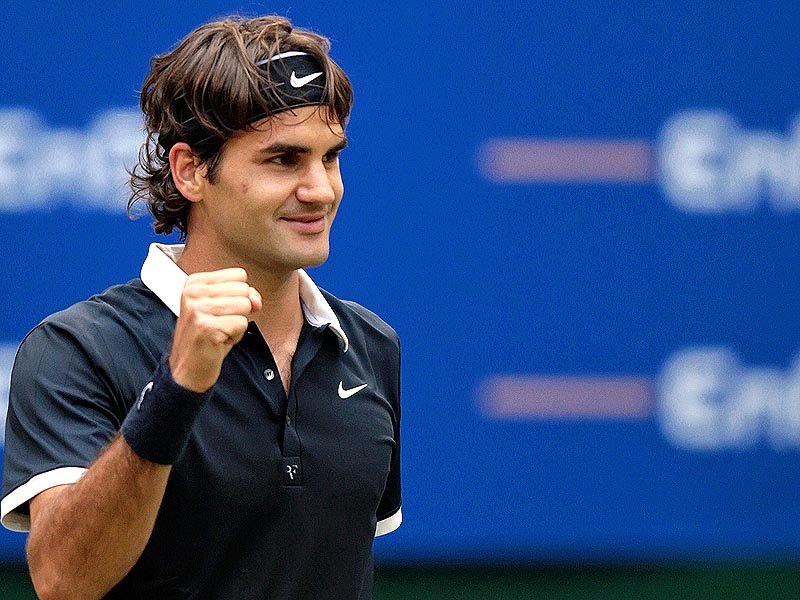
Amid all the sports craze surrounding Armando Galarraga, The Stanley Cup, The NBA Finals, and Tiger’s return to golf, I would just like to announce to the sports world that Roger Federer was defeated in a Slam… in the quarters. Roger lost at Roland Garros this Tuesday to 5 seed Robin Soderling in a rematch of last year’s final at the French Open; Soderling is the same man who ended Rafeal Nadal’s historic streak on clay at Roland Garros last year, before falling to Federer in the Final. Soderling’s victory on Tuesday ended Roger Federer’s epic streak at Slam Tournaments. This was a streak that has flown under the radar, but is perhaps the most impressive in all of sports…period. Going into Tuesday’s match with Robin Soderling, Roger Federer had reached the semifinals in 23 straight Slam Tournaments. That’s right, 23 straight! That is six years of tennis, a physically demanding and mentally strenuous game. 23 straight over 6 years. Take it in, digest it. I cannot even put it into perspective for readers because there is nothing fathomable to such a feat. I guess the closest comparison would be to say how stunning it would be if Tiger Woods placed top 4 in the Masters, The US Open, The Open Championship (British), and the PGA Championship 23 consecutive times… he has never done it. Bottom line, Roger Federer is the best athlete in the world right now, and has been for the last six years. Simply put, he is the most dominant athlete of our generation (and yes, that includes Tiger). He is the best tennis player of all time, no question. Yes, Tuesday’s loss at the hands of Sweden’s Robin Soderling may be the beginning of a slow decline for the man known as Fed, but I believe Roger still has a few Slams left in him… Just wait until the grass of the All England Club – I predict a 17th Slam Title at Wimbledon 2010.
Jebidiah Goes Musical
I have heard The Temper Trap all over the place recently. I have loved this band for a while and it has come time to give them some love on the college take. This video for the song "Love Lost" is not the official music video but was entered in a contest to become the official video for the song...and in my opinion it should win; the video is witty, exciting, and it matches the music and lyrics perfectly. Enjoy!
By the way...if the video you watch is cut off on the side then you are using internet explorer, if you use firefox you will be able to see the whole video
By the way...if the video you watch is cut off on the side then you are using internet explorer, if you use firefox you will be able to see the whole video
Tuesday, June 1, 2010
Today's Random Fact

Learned this one at work today. The slang term for a prostitute, "hooker", came from a group of young women that followed around General Thomas Hooker during the Civil War era. Some of them were prostitutes and some just followers.
Music Update - Land of Talk
Land of Talk came to Portland, ME, my home town last night. I missed it. I wanted to go but could not find people who would join me, as this band is not very well known. Ticket price - $8. Are you kidding me! If you ever get a chance to go see them...do it! and if you dont know who they are...here's a video for their song "Its Okay". It was nominated for video of the year at the 2010 Juno Awards. And yes, the Juno awards are a big deal; it is essentially Canada's version of the Grammy Awards. In attendance at the Juno Awards: Michael Buble, Nickelback, Drake, Black Eyed Peas, Britney Spears, Kings of Leon, Taylor Swift, K'naan, and countless other extraordinary artists. The point I am trying to make is, if you can see someone nominated for a Juno Award at a cozy venue in your hometown for 8 dollars... do it!
Subscribe to:
Comments (Atom)